
Marathon reinforces emergency readiness with air monitoring drills
Business News
Galveston Bay, Texas, environment, sustainability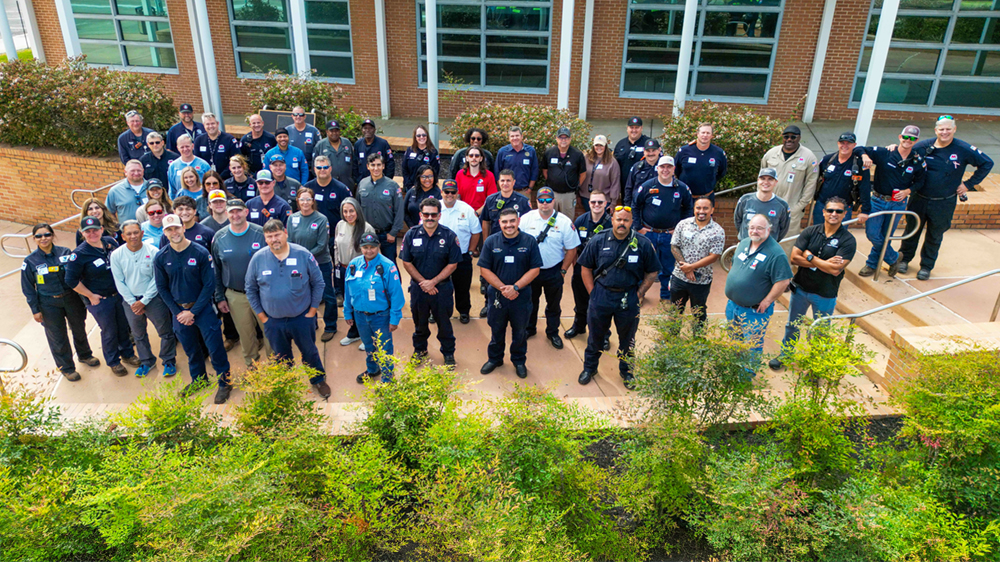
Key Points
- Marathon Petroleum Corp. (MPC) conducted its annual Air Monitoring Team drill to strengthen readiness by rapidly collecting, interpreting and sharing air monitoring data.
- The exercise trained teams on deployable monitoring tools and emphasized clear roles, chain of command and communication to support timely protective actions.
- For the first time, the drill included community response partners and neighboring industry, reinforcing coordination across more than 80 participants.
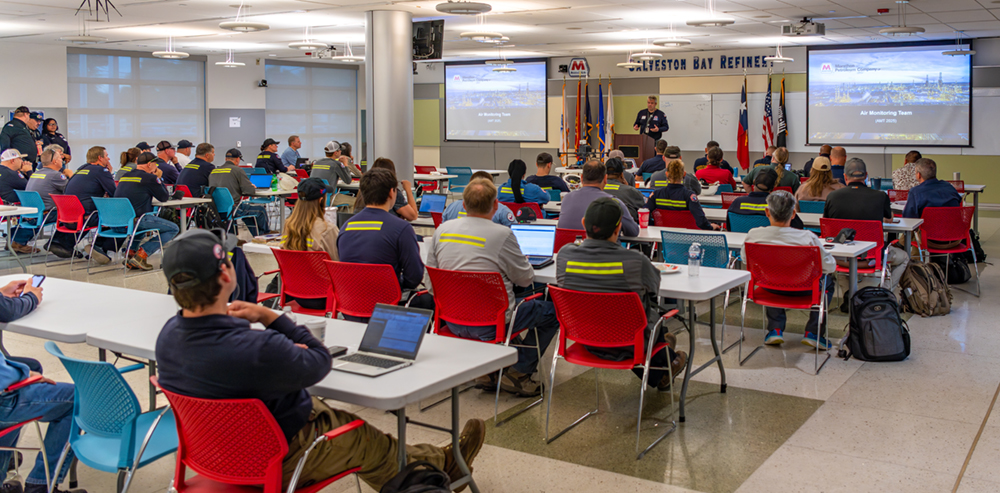
Air monitoring specialists, emergency management teams and local responders gathered at the Marathon Petroleum Corp. (MPC) Galveston Bay Refinery for a hands-on exercise to strengthen readiness for potential future incidents. The drill focused on a critical response capability: quickly collecting, interpreting and sharing air monitoring data to support timely decisions that help protect the community and the environment during an unplanned event.
Coordinated by MPC’s Corporate Occupational & Environmental Hygiene (OEH) group, the annual Air Monitoring Team (AMT) drill rotates across MPC locations. The exercise focuses on deployable monitoring tools that can be positioned where they’re needed most based on weather and changing conditions.
“Seeing how quickly the data comes together and how it supports decisions was a great reminder of why we train this way.”
“The AMT drill brings together personnel from across MPC to practice fenceline and community air monitoring in the event of a fire or chemical release that has the potential to affect areas outside the facility,” said Trevor Gillig, Director, Occupational & Environmental Hygiene / Toxicology & Product Safety. “It’s also an opportunity to train on state-of-the-art equipment, benchmark best practices across the company and push beyond the status quo.”
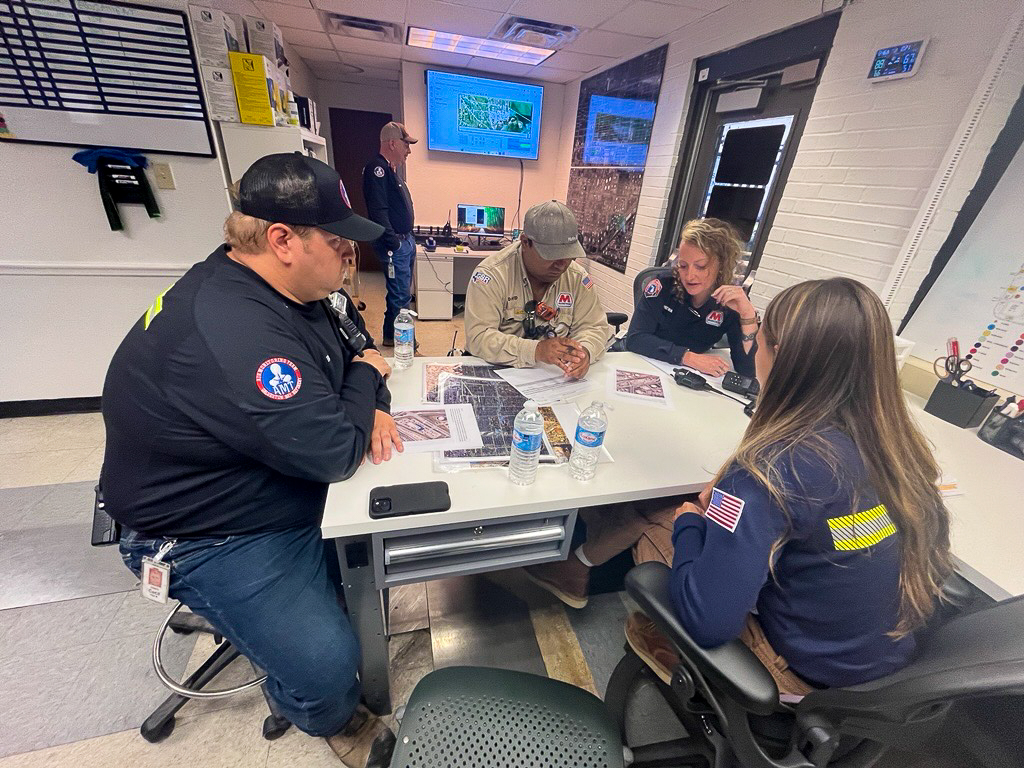
One of those tools is the Air Monitoring Team App created by MPC. It allows users to document air monitor results for instruments that do not have wireless connection capabilities. It received an honorable mention at the AFPM safety awards in May for industrial hygiene innovation.
The goal of the AMT training is simple: enable informed, timely decisions. When responders understand downwind concentrations and share clear guidance with incident command, and local agencies can provide reassurance when readings show no hazardous levels, or they can take protective actions they may deem appropriate, such as calling for a shelter-in-place.
It’s a practical example of MPC’s commitment to Safety & Environmental Stewardship and the trust the company works to earn in the communities where it operates.
The drill also marked the first time that OEH and the Galveston Bay refinery Industrial Hygiene team invited local responders and neighboring industry to train alongside MPC teams.
“Including local responders ensures strong collaboration, which is critical to rapid, coordinated responses during high-risk incidents,” Gillig said. “With more than 80 participants, the event demonstrated the strength of shared expertise.”
Participants included neighboring industry representatives, local fire departments, county health officials and emergency management organizations.
“Running the scenarios with local responders in the room made the exercise feel even more real,” said Jacob Nowicki, Industrial Hygiene Manager at the Galveston Bay Refinery. “Seeing how quickly the data comes together and how it supports decisions was a great reminder of why we train this way.”
The day combined classroom refreshers with hands-on deployment. Teams reviewed roles and responsibilities, then moved into the field for two scenarios while Emergency Operations Center-based members received results, built the operating picture and coordinated next steps.
“The training emphasized clear roles, chain-of-command and effective communication strategies, which are essential for successful incident management,” Gillig said.
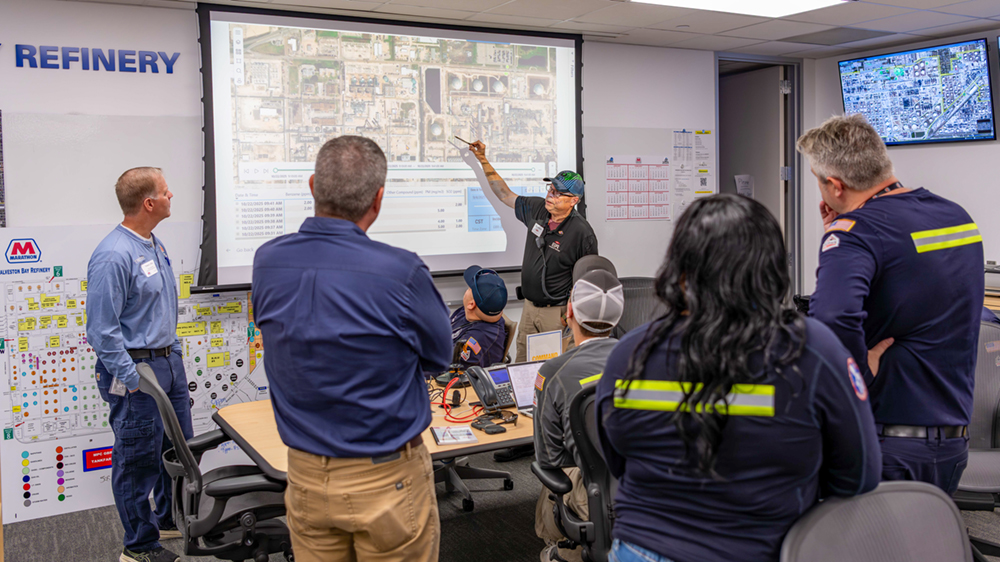
This exercise focuses on deployable emergency response air monitoring, portable equipment and tools used to assess conditions during an incident and help guide protective actions. It is different from the EPA-regulated benzene fenceline monitoring programs in place at our sites, which are designed for ongoing compliance monitoring.
OEH will keep rotating the AMT drill across MPC locations to build on lessons learned, strengthen relationships and refine tools, training and playbooks so teams can respond with speed, consistency and environmental responsibility during unplanned events.
MPC’s next AMT drill is planned for October at its El Paso refinery.