Getting more fuel where it’s needed with Marathon Petroleum’s first new light products terminal in 30 years
Business News
Galveston Bay, logistics, business, Houston, Texas
Key Points
- Marathon Petroleum has built a new light products truck terminal for the first time in 30 years, enhancing fuel delivery efficiency to help meet strong U.S. demand.
- The facility in Pasadena, Texas, distributes gasoline and diesel produced at the company’s Galveston Bay refinery.
- The terminal was designed to accommodate future expansion, and two more loading lanes are scheduled to be added next year in response to demand growth.
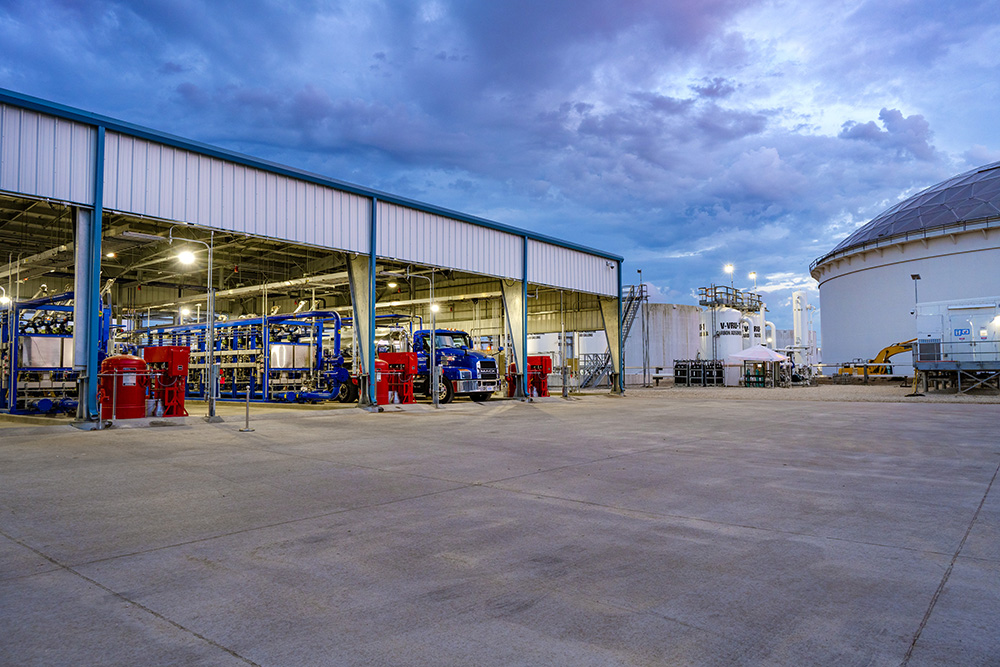
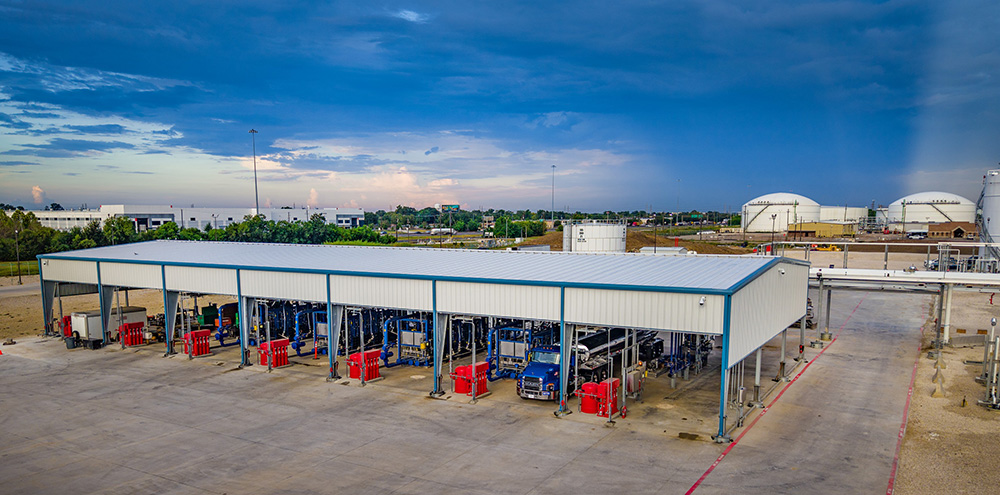
Amid strong ongoing U.S. fuel demand, Marathon Petroleum Corporation (MPC) has invested in new infrastructure to help keep fuel flowing as efficiently as possible to where it’s needed most. MPC recently worked with its midstream segment, MPLX, to build the company’s first light products truck terminal in 30 years on company-owned property in Pasadena, Texas, part of the Houston metro area.
“The location had existing tankage and historically was used by the company as a bulk storage site,” MPLX Transportation & Rail Vice President Jason Stechschulte said. “The project converted the site into a state-of-the-art truck terminal for distributing gasoline and diesel produced at MPC’s Galveston Bay refinery.”
Repurposed by demand
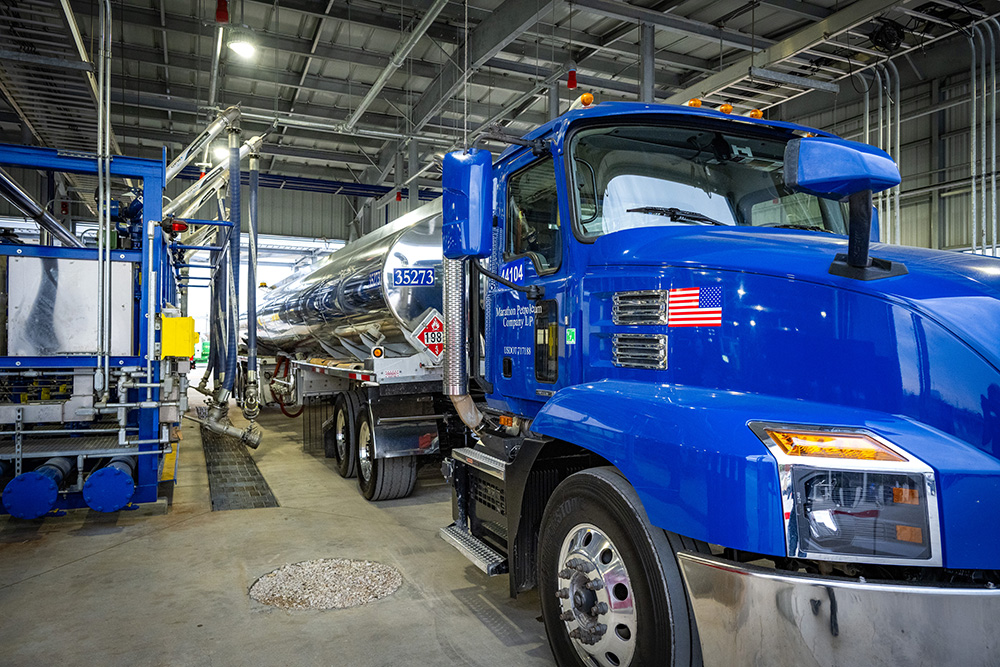
Design work for the conversion began in 2023, prompted by MPC’s increasing demand in the greater Houston market. The project involved leveraging the storage site’s existing tankage and installing additional piping and electrical connections to accommodate construction of a loading rack for transport trucks. The new terminal has four loading lanes and an off-loading lane for ethanol and other additives.
“Site development was a large design challenge,” said MPLX Major Projects Engineering Manager Scott Karhoff. “To accommodate adequate stormwater management, detention ponds had to be built on the property. Due to high water tables, the entire property had to be built up with four to six feet of soil to accommodate the pond design.”
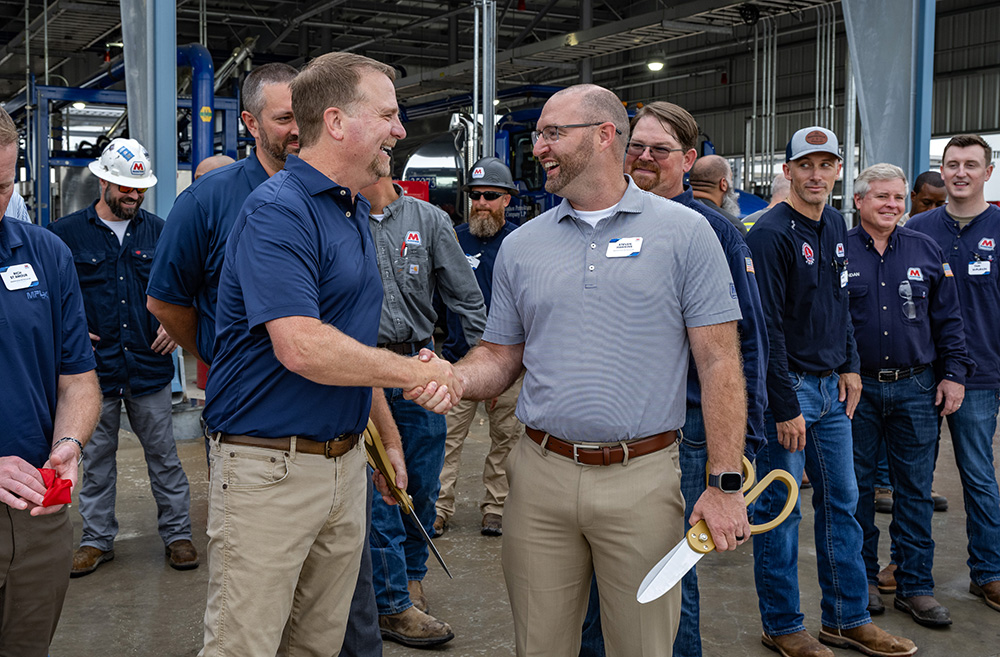
“Significant market demand has enabled us to move forward with a previously designed expansion scope that will add a fifth and sixth lane in 2027.”
Cross-functional collaboration linked all phases of the project. A group of teams managed tasks that ranged from assessing financial aspects and providing input on design and operation to delivering project estimates and leading construction. The facility is owned and operated by components of MPLX.
More to come
The terminal was designed from the beginning to allow for future expansion in view of market dynamics.
“Once the initial build-out of the facility was authorized, the scope had already expanded from three to four loading lanes,” said Ryan Stobbs, MPLX Asset Development Senior Director. “Significant market demand has enabled us to move forward with a previously designed expansion scope that will add a fifth and sixth lane in 2027.”