
Galveston Bay refinery team leads one-of-a-kind emergency response drill
Business News
Galveston Bay, Texas, environment, sustainability, safety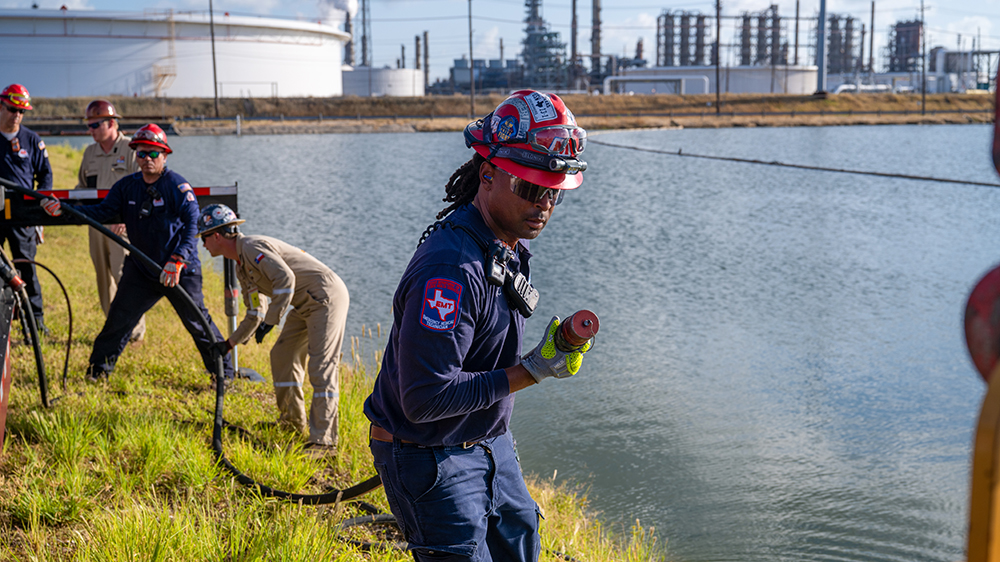
Key Points
- In August, Marathon Petroleum’s Galveston Bay refinery in Texas City hosted a first-of-its-kind drill, bringing together company responders, local agencies, community partners and peer companies.
- Marathon emergency responders successfully moved nearly 30,000 gallons of water per minute, marking what is believed to be the first time a U.S. refinery has demonstrated the ability to pump water at that scale.
- Leaders said the exercise strengthened collaboration, tested real-world preparedness, and reinforced how Marathon’s emergency response teams work together across the enterprise.
Months of planning, miles of fire hose and teams from across Marathon Petroleum came together Aug. 11 for an emergency response drill unlike anything previously demonstrated at a U.S. refinery.
The full-scale exercise at Marathon Petroleum’s Galveston Bay refinery in Texas City, Texas, gave teams a chance to push their preparedness further and test in real time how they would respond to a major fire involving one of the refinery’s largest crude oil storage tanks.
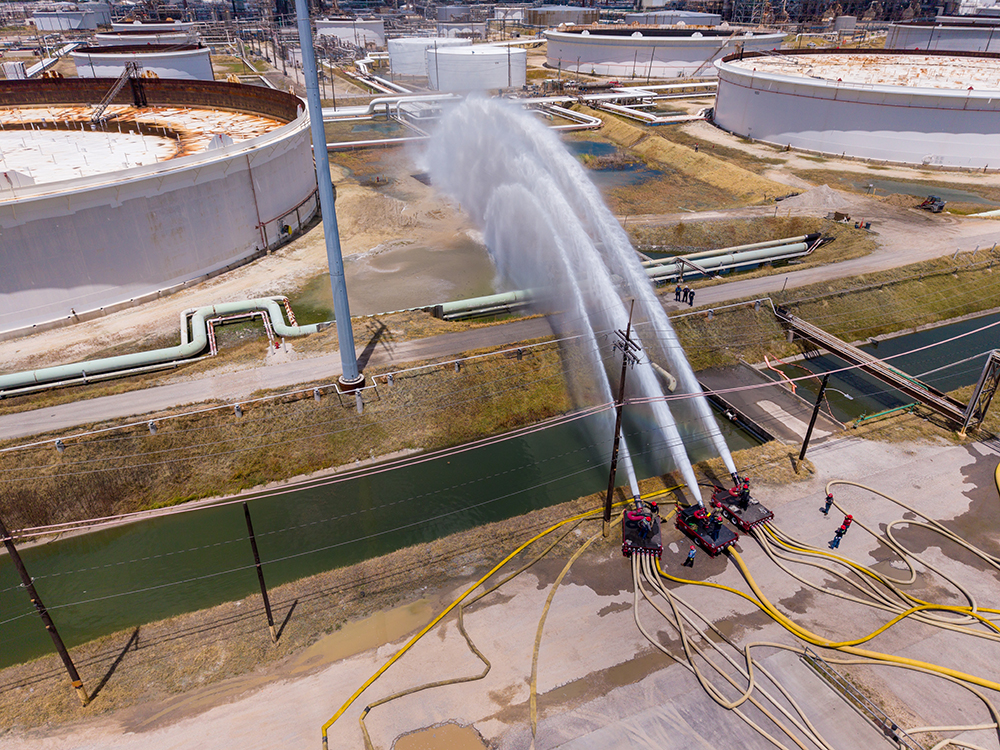
“Our goal was to establish the water and foam flow needed to extinguish a 345-foot-diameter crude tank, which is a worst-case scenario at a refinery,” said Mike Phares, Fire Chief at the Galveston Bay refinery and a member of the planning team that helped make the historic drill possible.
Galveston Bay is home to some of the largest crude oil storage tanks in the country, with some nearly the length of a football field from one side to the other.
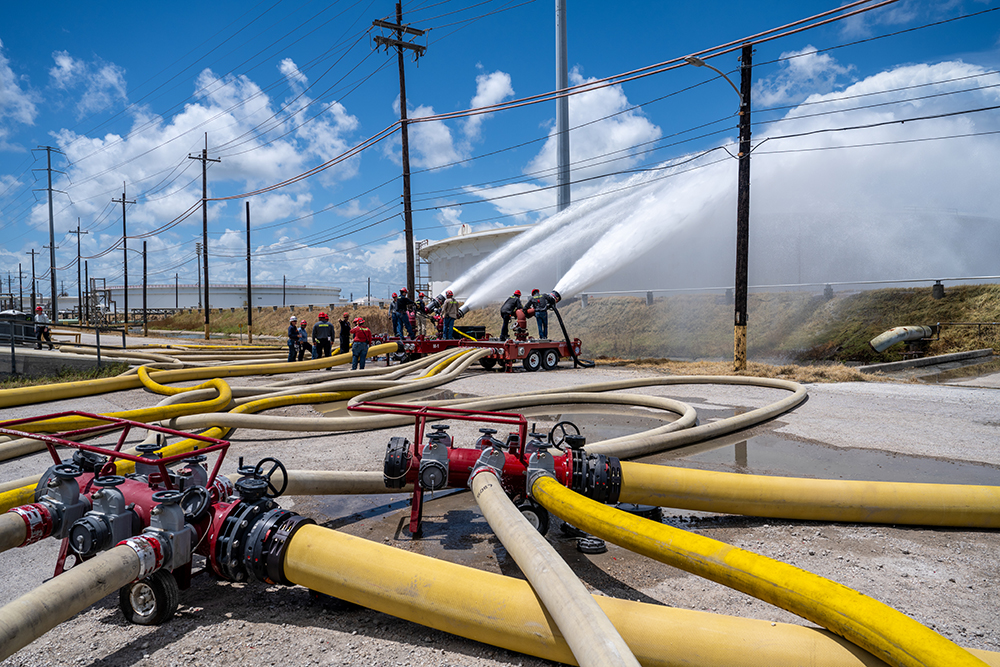
If a fire involved a tank that size, responders would need to move nearly 30,000 gallons of water per minute, enough to fill an 18-wheel tanker truck about every 10 seconds.
“Everything we do every single day is to prevent these incidents from happening, but the whole point of this drill is to make sure our plans on paper match our capability,” said Honor Sheard, Refining Environmental, Safety & Security director at the Galveston Bay refinery.
Planning the exercise began months earlier. When drill day arrived, teams from across Marathon were joined by local emergency response agencies and community partners, so they could put those plans to the test.
“Everything we do every single day is to prevent these incidents from happening, and we also have to know how to respond to them.”
“The team did an amazing job,” said John Gross, Emergency Response Manager for Refining at Marathon Petroleum. “Everyone took this drill very seriously, and the collaboration could not have gone any better.”
Eric Lavergne was among seven members of the Williams Fire & Hazard Control team from nearby Port Arthur who participated in the drill and saw firsthand how months of planning came together in real time.
“What impressed me most was how quickly Marathon was able to organize and deploy the resources required for an event of that scale,” Lavergne said. “There is a big difference between having a response plan on paper and actually bringing the people, equipment and resources together. By the end of the exercise, I think the answer was clearly, ‘Yeah, we can do that.’”
The drill successfully moved the required volume of water, marking what is believed to be the first time a U.S. refinery has demonstrated the ability to pump water at that scale. As part of the drill, crews sprayed water into the tank’s secondary containment area and then returned it to the pond from which it was drawn.
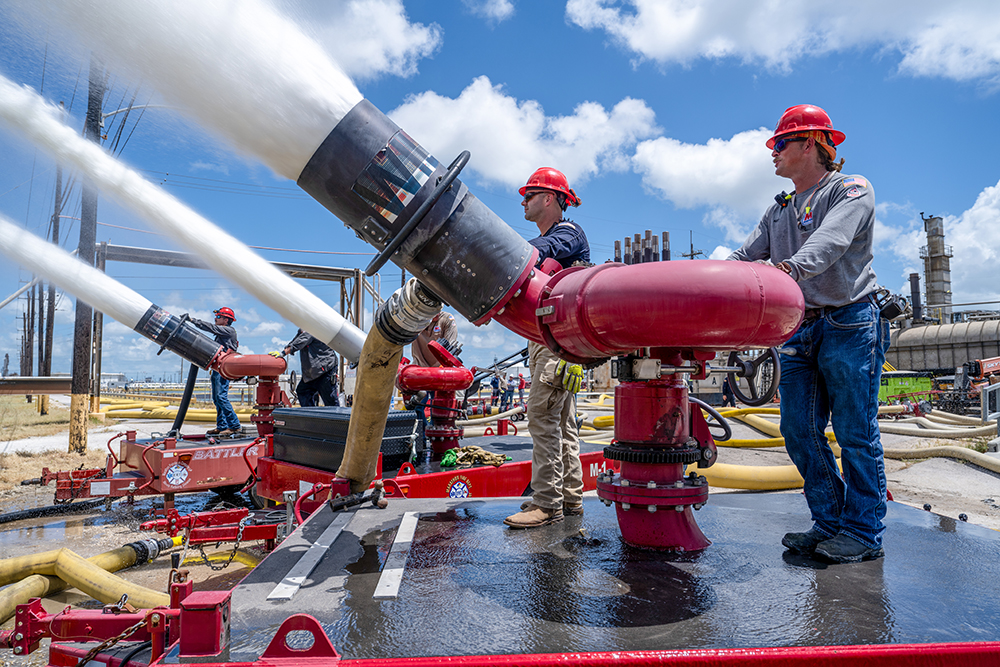
But the exercise proved more than the numbers. It also showed the value of bringing together Marathon teams, local agencies and community partners who would play a role in a response like this.
“The interaction and sharing of information led to new ideas and new scenarios we may not have thought of before,” Sheard said. “Pulling all of the teams together so they understand the magnitude of what we do and how we need to respond is so important.”
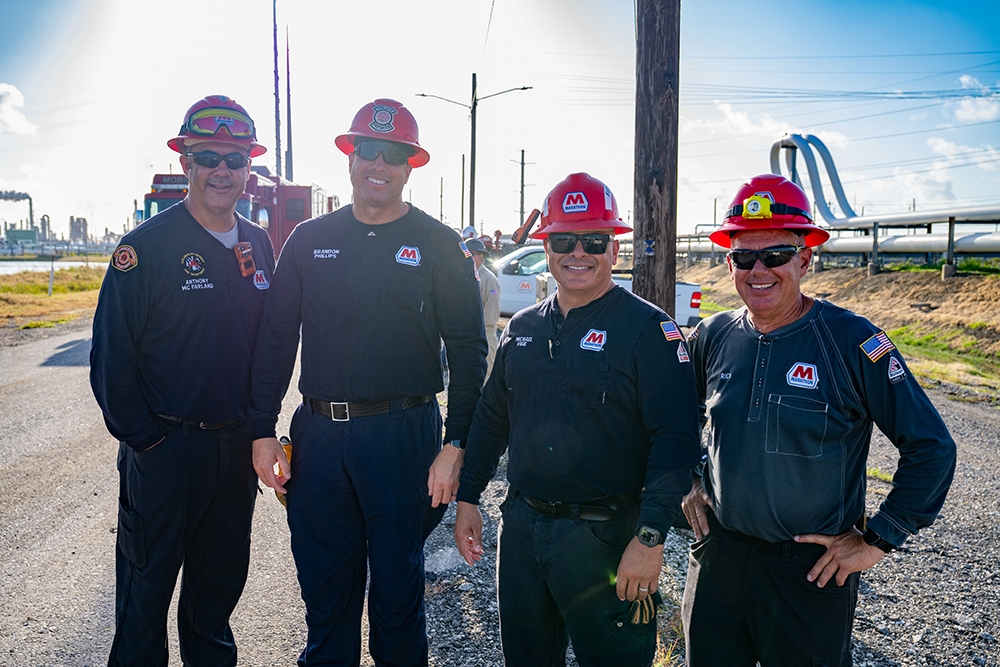
While the drill primarily involved local team members, they also worked alongside members of Marathon’s vast network of emergency responders spread across the enterprise, reinforcing how teams from across the company could work together if a real event took place and why being prepared and always at the ready is the Marathon way.
“What came out of this drill more than anything is that at Marathon, we are one team, regardless of the ZIP code,” Gross said. “When we need to come together, it doesn’t matter where we’re based. We’re all working toward the same goal.”
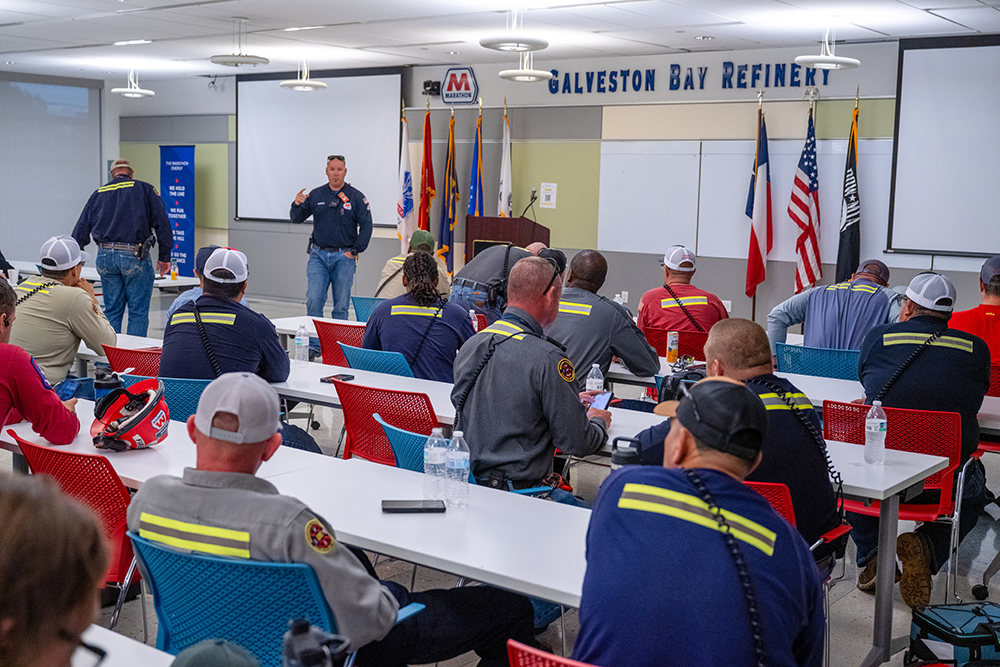
Drill and refinery leaders said the exercise demonstrated Marathon’s commitment to safety, collaboration, integrity and excellence.
“This was our commitment to employees, contractors, community partners and members of our community in action,” Sheard said. “It’s about working together to keep our operations safe and reliable, and continuing to learn, improve and prepare so we are ready to respond if we ever need to.”